By Darah Whyte, Director of Marketing & Communications for Hill Learning Center
It all started at The Reading League conference in Charlotte, NC, in October 2024. I was representing Hill in the exhibit hall, connecting with educators from across the country about our workshops, online courses, and custom professional development. One of my favorite things about conferences is the unexpected connections, and on the second day, I met Michelle Candy from the North Dakota Department of Corrections and Rehabilitation.

Michelle told me that she was looking for professional development on the science of reading that dug into the brain science behind how we learn to read. Her goal was to bring together a range of educators from the correctional department school programs and provide everyone with shared foundational knowledge and actionable strategies.
It was a perfect fit for Hill’s Custom Science of Reading Short Course Facilitation. In addition to strengthening our core K–12 programs, Hill’s new strategy also focuses on expanding access to evidence-based literacy practices in non-traditional learning environments—including correctional education settings.
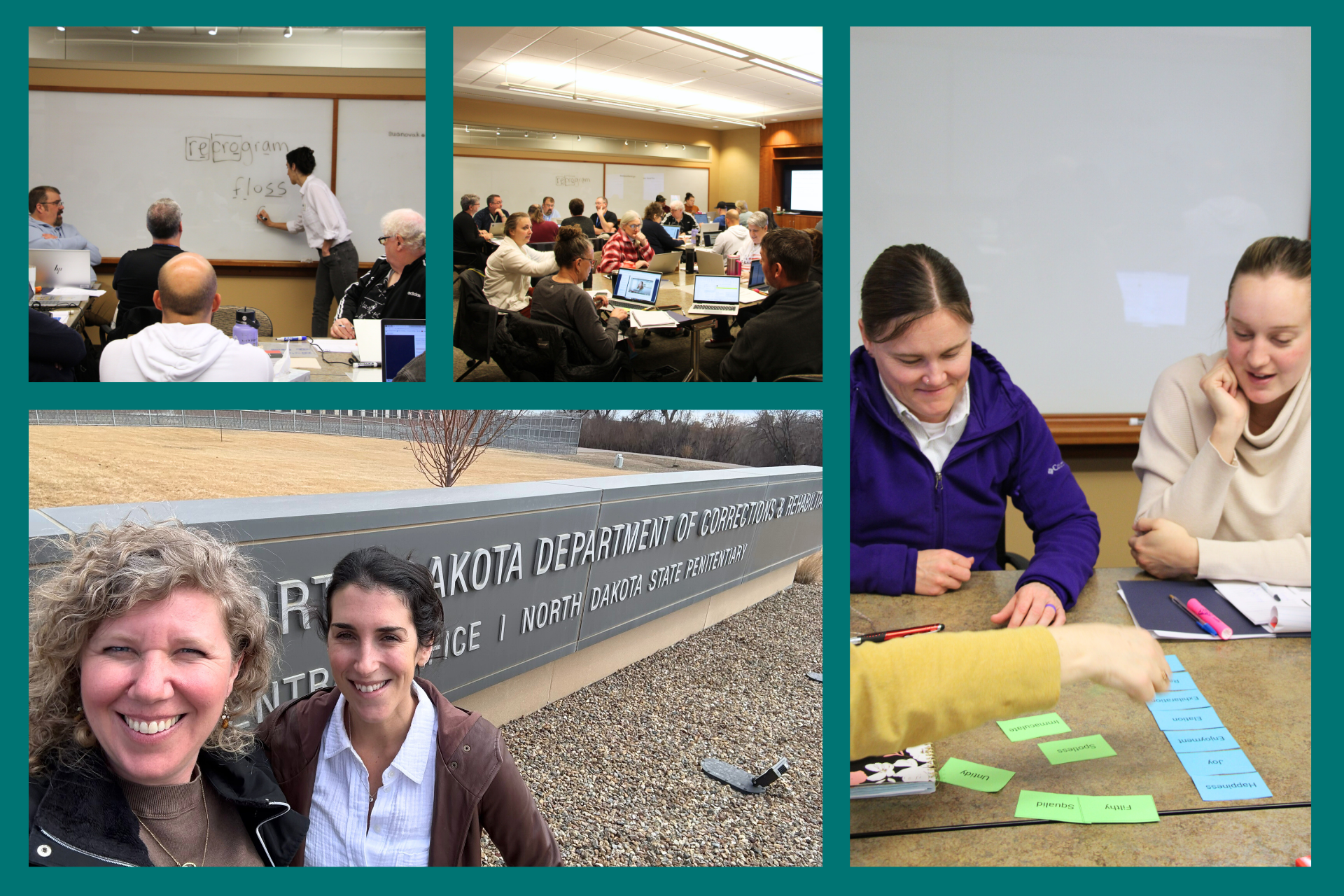
Fast forward just five months, and we were on our way to Bismarck, North Dakota, to work with 30 dedicated educators for two full days of training. I traveled with Emily Ringler, Hill’s Director of School and District Partnerships. Not only is Emily passionate about literacy, but she has a particular interest in expanding educational access for incarcerated individuals.
“I believe everyone deserves access to high-quality literacy instruction, regardless of circumstance. This work reminds us that literacy isn’t just academic—it’s deeply personal, empowering, and life-changing.”
Emily Ringler, Hill’s Director of School and District Partnerships
North Dakota has some of the most progressive correctional education policies in the country, including a requirement that individuals in custody pursue and earn a GED. That commitment creates an opportunity for educators to provide not just instruction, but transformation. According to the National Center for Education Statistics’ “Literacy Behind Bars” report, nearly 75% of incarcerated adults struggle with reading, and low literacy is a key factor contributing to incarceration and recidivism. Supporting these learners with evidence-based instruction is both a moral imperative and a public good.
Over the course of two days, Emily led an immersive training rooted in Hill’s Science of Reading Short Course, tailored specifically for adult educators working with individuals preparing for the GED. The first day focused on foundational frameworks: the Simple View of Reading, Scarborough’s Reading Rope, and key principles of Structured Literacy. These models helped educators analyze the reading behaviors of their students and reflect on how to improve their instructional strategies.
The second day was about practical application. In the morning, we explored Word Recognition: phonological and phonemic awareness, phonics (including multisyllabic decoding), high-frequency words, morphology, and fluency. In the afternoon, we dove into Language Comprehension: background knowledge, vocabulary, and inferencing—all essential for building deep understanding.

This hybrid professional development model blended direct instruction with hands-on activities, collaborative discussion, and access to Hill’s online course for continued learning.
As site principal Melissa Bossingham shared: “I enjoyed this training. I liked how we had many opportunities to get out of our seats for activities, worked in smaller groups, and discussed text in whole group discussions.”
And participants couldn’t say enough about the quality of the facilitation. As one educator, Sherry, shared: “Emily may be the BEST presenter I have ever had for a PD opportunity. Gracious, calm, smart, and the pacing was on point.”
Why This Work Matters
For many of the educators we met in Bismarck, this training wasn’t just professional development, it was personal. They came because they care deeply about their students and believe in their potential.
As one participant shared: “Making a difference in the lives of students has always been my goal. Working with incarcerated individuals makes that difference more significant. Many of our students are those who have been abused by the system and lack confidence. Helping them to gain that confidence leads them to make better choices in life. It’s rewarding to see that type of growth.”
One participant, Arin, also reflected on how the science of reading has transformed her approach: “For my students, many of whom have been overlooked or mislabeled throughout their educational journeys, this approach means they’re finally getting the foundational skills they’ve missed… When they start to see themselves as capable readers, it changes their mindset and opens up possibilities beyond survival. It’s about giving them the power to understand the world around them and make better choices for their futures.”
And while the workshop was the focal point of the trip, we couldn’t help but appreciate the warm welcome we received in Bismarck. It’s a charming, friendly city that clearly takes pride in community.
Working with educators who teach older students, or those who serve in non-traditional educational settings, is an important part of Hill’s commitment to expanding literacy access for all learners. Whether it’s through partnerships like our Science of Reading series with Durham Public Schools or this work with correctional educators in North Dakota, we know that strong literacy instruction can change lives at any age and in any environment. We left North Dakota feeling deeply inspired and grateful, for the partnership, the passion of the educators, and the opportunity to contribute to something bigger.
Interested in bringing this training to your team? Learn more about Hill’s Science of Reading Short Course.
About the Author
Darah Whyte is the Director of Marketing & Communications at Hill Learning Center, where she’s worked since 2016. She is committed to sharing stories that elevate meaningful work in education and expand access to opportunity.